Some links in this article may be affiliate links. See our disclosure for details.
How to Compare Gold ETFs: Fees, Structure, Custody and the Bars Behind Them
By Thomas Lovas Lokoy | Published November 12, 2026Researched and drafted with AI from published sources; edited and published by NorwegianSpark SA. Editorial policy.
The short answer
Two physically backed gold ETFs hold the same metal, so their price charts look almost identical. What differs is what you pay every year, what the legal wrapper actually gives you, who holds the bars and where, how you can check that the bars exist, and what happens if you ever want metal rather than shares. Compare them on six things, in this order: structure, fee, custody, proof of the bars, redemption, and tax. Trading costs and fund size come last, because for a private holder of a large gold product the spread you pay once can easily be smaller than a fee you pay every year for as long as you hold it.
To show the method working, the table below runs five widely held products through the same checklist, using what each issuer states in its own documents, read on 12 November 2026. They are examples, not recommendations, and fees and custodians can change; check the issuer's current page before you buy.
Five gold ETFs on the same checklist
| GLD | GLDM | IAU | IAUM | SGLN | |
|---|---|---|---|---|---|
| Full name | SPDR Gold Trust | SPDR Gold MiniShares Trust | iShares Gold Trust | iShares Gold Trust Micro | iShares Physical Gold ETC |
| Legal form | Trust, taxed as a grantor trust in the US | Trust | Grantor trust under New York law | Grantor trust under New York law | Exchange-traded commodity: limited-recourse debt securities issued by iShares Physical Metals plc (Ireland) |
| Annual fee | 0.40% | 0.10% | 0.25% | 0.09% sponsor fee, voluntarily waived to no more than 0.07% until 30 June 2027 | 0.12% total expense ratio |
| Gold custodian | JPMorgan Chase Bank N.A. and HSBC Bank plc | JPMorgan Chase Bank N.A. | JPMorgan Chase Bank N.A., London Branch | JPMorgan Chase Bank N.A., London Branch | Not named on the factsheet |
| Bar list published | Yes, one per custodian | Yes | Yes | Yes | Yes |
| Where it trades | NYSE Arca (US dollars) | NYSE Arca | NYSE Arca | NYSE Arca | London Stock Exchange in pounds (SGLN) and dollars (IGLN); Xetra in euros (PPFB) |
| Creations and redemptions | Authorised participants only, in blocks of 100,000 shares | Not stated on the product page | Authorised participants only, in blocks of 50,000 shares | Authorised participants only, in blocks of 50,000 shares | Not described on the factsheet |
Sources: GLD and its January 2026 FAQ; GLDM; IAU's product page and Form 10-Q for the quarter to 30 September 2026; IAUM's product page and Form 10-Q for the same quarter; SGLN's factsheet, data as at 4 November 2026. All read on 12 November 2026.
Two things stand out before any analysis. First, the fee range is wide for products that do the same job: the most expensive of the five charges more than four times the cheapest. Second, the European product is not a fund at all, and that changes what you own. Both points are worth taking in turn.
1. Structure: what you actually own
The first question is not the fee; it is what the wrapper is.
The US gold trusts (GLD, GLDM, IAU, IAUM) hold gold bullion and issue shares representing fractional interests in the trust. The iShares filings describe each trust as "a grantor trust formed under the laws of the State of New York" whose assets "consist primarily of gold bullion held by a custodian". GLD's documents and the iShares Gold Trust's page both state that the trust is not an investment company registered under the US Investment Company Act of 1940, so shareholders do not get the protections that come with a registered fund.
The European exchange-traded commodity (SGLN in this example) is a debt security. Its factsheet says the securities issued by iShares Physical Metals plc "are limited recourse bonds, payable only from the underlying secured property", and that if the secured property is insufficient, outstanding claims remain unpaid. In other words, you are a secured creditor whose claim is limited to the metal set aside for the product. That is a sound structure when the metal is there and properly held, but it is a different legal position from owning a share of a trust.
What to avoid confusing them with: an exchange-traded note that tracks the gold price without holding gold is an unsecured promise from its issuer. It can track the price perfectly and still lose you money if the issuer fails. The checklist question is simple: does the product's own document say it holds physical gold, and is that gold allocated to it? If the answer is not a plain yes, you are buying credit risk with a gold price attached. Our comparison of gold ETFs and physical gold explains why that distinction matters most when markets are under stress.
2. Fee: the cost you pay every year
The fee is deducted from the fund's assets continuously, so it is the one cost that grows with time. On a holding of $10,000, by simple arithmetic, a 0.40% fee is about $40 a year, 0.25% about $25, 0.10% about $10 and 0.09% about $9. Over a decade the gap between the top and the bottom of this table comes to roughly $300 on that sum, before any compounding.
Read the fee from the issuer's own page or filing, not from a comparison site, and note whether it is permanent. IAUM is the example here: its 10-Q states a sponsor fee of 0.09% a year and a voluntary waiver that keeps it at no more than 0.07% until 30 June 2027, adding that the sponsor "may revert to the 0.09% fee" before then with at least 30 days' notice. A waiver is worth having, but compare products on the fee you will pay after it ends.
Also check how the fee is paid. GLD's own FAQ says that because the trust sells gold to pay its expenses, "the amount of gold represented by each Share will decline over time". That is how the fee reaches you: not as a bill, but as slightly less gold behind every share each year.
3. Custody: who holds the bars, and where
Every physically backed product depends on a custodian bank holding the gold. Ask three things: who the custodian is, where the vaults are, and whether the gold is allocated.
GLD's FAQ answers all three. Its custodians are JPMorgan Chase Bank N.A. and HSBC Bank plc; HSBC holds the trust's gold in its London vault, and JPMorgan in its vaults in London, New York and Zurich. All of the trust's gold sits in allocated accounts in bar form, with two stated exceptions: gold passing through unallocated accounts during creations and redemptions, and the small amounts sold each month to pay expenses. The FAQ also says the gold held in the allocated accounts "is not traded, leased or loaned under any circumstances".
The same document is candid about the limits. The trust does not insure its gold; the custodians carry insurance for their own business that "does not cover the full amount of gold held in custody", and the trust is not a beneficiary of it. Custodians can also appoint subcustodians to hold bars temporarily. None of this is unusual, but it is exactly the kind of detail a comparison should read rather than assume, and it is why a product that publishes this level of disclosure is easier to judge than one that does not.
For the iShares trusts, the 10-Q filings name JPMorgan Chase Bank N.A., London Branch, as the custodian responsible for the safekeeping of the gold.
4. Proof of the bars: bar lists and counts
The question "does IAUM hold physical gold?" has a checkable answer. The iShares product page for IAUM reported 2,020,371.36 ounces, or 62.84 tonnes, held in the trust as of 11 November 2026, and links to a gold bar list; the trust's 10-Q says its assets consist primarily of gold bullion held by its custodian. The same applies to the other four products here: each publishes a bar list.
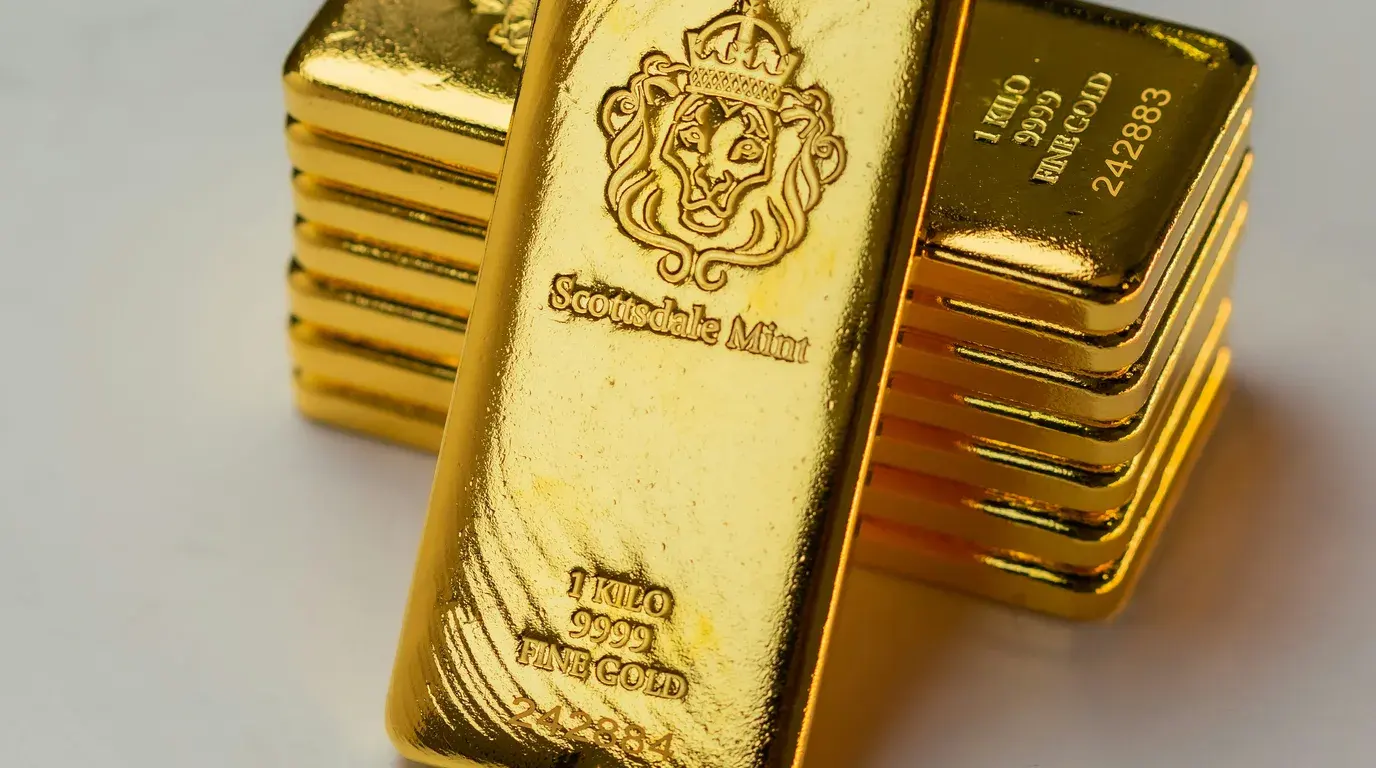
A bar list is the strongest single document an ETF investor can read. For an allocated account, GLD's FAQ explains, the list identifies each bar by refiner, fineness, serial number and gross and fine weight. Bars held by the US trusts must meet the London Good Delivery standard: at least 995 parts per 1,000 fine and between 350 and 430 fine troy ounces each, stamped by a refiner on the LBMA's approved list. Our guide to LBMA Good Delivery bars explains what that standard does and does not guarantee.
Then look for independent counts. GLD states that Bureau Veritas Commodities UK carries out two counts a year at the custodians' vaults: a full bar count at the 30 September financial year end and a random sample count during the year, with the results published on the fund's website. A product that publishes a bar list, names its custodian and publishes count results has given you what you need to check it. A product that does none of the three is asking for trust it has not earned.
5. Redemption: can you ever get the metal?
For most retail holders of a US gold trust, the answer is no, not directly. IAU and IAUM issue and redeem shares only in blocks of 50,000 shares and only with authorised participants, and the filings state that "individual investors cannot purchase or redeem Shares in direct transactions with the Trust". GLD works in blocks of 100,000 shares through authorised participants; its FAQ says an individual who wants to exchange shares for physical gold "would need to discuss and make arrangements with the investor's broker".
Some European products are built differently. Xetra-Gold, from Deutsche Börse Commodities, describes itself as a debt security that "certifies the right to delivery of gold bars at any time" (Xetra-Gold). Delivery is not free: its own cost page says the investor bears refining, moulding, packing, transport, insurance and VAT costs, and estimated them in December 2025 at €468 for 1 kg delivered in Germany, excluding VAT (costs of exercise). If the right to take metal is the reason you are buying, it has to be in the product's terms, not assumed.
If what you actually want is bars or coins you can hold, buying the metal is the direct route. Silver Gold Bull, a bullion dealer we have an affiliate partnership with, sells gold bars; compare its premium on the exact product against at least one other dealer, and read our premiums over spot guide before you do.
6. Tax: the same metal, different rules
Tax can matter more than the fee, and it depends on where you live and which wrapper you hold.
United States. GLD's FAQ states that the trust is treated as a grantor trust, so its income and expenses flow through to shareholders, and that under current law gains recognised by individuals on the sale of a "collectible", including gold bullion, held for more than one year are taxed at a maximum rate of 28% rather than the 20% that applies to most long-term gains. It adds that gain on selling an interest in a trust holding collectibles is treated as collectibles gain to the extent it reflects appreciation in the trust's gold. The iShares trusts are also grantor trusts; read each prospectus's tax section rather than assuming identical treatment.
United Kingdom. SGLN's factsheet lists it as ISA-eligible, available in a SIPP and holding UK reporting status. Those are the product facts; whether a wrapper suits you is a personal tax question.
Everywhere else. The answer is local. Our guide to capital gains tax on gold explains how different countries treat bullion against securities, and VAT on gold and silver covers the purchase side of physical metal, where investment bullion is often exempt.
Trading costs, size and "investor attention"
Only now does liquidity enter the comparison. When you buy or sell on an exchange you pay your broker's commission and cross the bid-ask spread. For the largest gold products both can be small next to a decade of fees, but for a small or thinly traded product the spread can be wide. Look at the live bid and ask in your own broker before you place an order, use limit orders, and prefer the listing in your own currency where one exists: SGLN trades in pounds on the London Stock Exchange, while the same product trades in dollars as IGLN and in euros on Xetra.
Fund size is a reasonable tie-breaker, not a headline. A large, long-established product has shown it can attract and keep assets; it says nothing on its own about fee, structure or custody, which is why it sits last in this checklist.
Gold ETF or gold you hold?
A physically backed ETF is a cheap, divisible way to own the gold price inside a brokerage account. It is not the same thing as holding metal outside the financial system, and it cannot be, by construction. If your reason for owning gold is diversification, a low-fee, transparently custodied product is hard to beat. If your reason is insurance against the failure of the system the ETF sits in, read why buy physical gold and how much gold to own before you choose the wrapper. And whichever you choose, the gold price behind it is set the same way; our explainer on the gold spot price shows who sets it and why every quote differs slightly.
A checklist you can run on any gold ETF
- Structure: does the product's own document say it holds physical gold, allocated to it? Is it a trust, a fund or a debt security?
- Fee: what is the annual fee on the issuer's page, is any part of it a temporary waiver, and how is it paid?
- Custody: who is the custodian, where are the vaults, and are subcustodians allowed?
- Proof: is a bar list published, and are independent counts carried out and published?
- Redemption: can you, as an individual, ever receive metal, and at what cost?
- Tax: how is the product taxed where you live, and does it fit the account you plan to hold it in?
- Trading: what are the live bid-ask spread and your commission in the listing you would actually use?
Frequently asked questions
Does IAUM hold physical gold?
Yes. The iShares Gold Trust Micro's 10-Q describes its assets as consisting primarily of gold bullion held by its custodian, JPMorgan Chase Bank N.A., London Branch, and its product page reported 62.84 tonnes in the trust as of 11 November 2026, with a published gold bar list.
GLD or GLDM: what is the difference?
Both are SPDR gold trusts listed on NYSE Arca. On their own pages, GLD charges 0.40% a year and holds gold with JPMorgan and HSBC; GLDM charges 0.10% and names JPMorgan as its gold custodian. For a long-term holder, the fee difference is the main point to weigh.
What is the cheapest gold ETF?
Among the five checked here on 12 November 2026, IAUM had the lowest stated fee: 0.09% a year, waived to no more than 0.07% until 30 June 2027. Fees change, and the cheapest product listed in your own currency and account type may be a different one, so compare current issuer pages.
Can I convert gold ETF shares into gold bars?
Not directly with the US trusts as an individual: creations and redemptions run through authorised participants in blocks of 50,000 or 100,000 shares. Some European products, such as Xetra-Gold, give holders a right to delivery of gold bars, with the delivery costs paid by the investor.
Is a gold ETC the same as a gold ETF?
No. A European physical gold ETC such as SGLN is a secured debt security whose claim is limited to the metal held for it; a US gold trust issues shares in a trust that holds the gold. Both can be physically backed, but the legal position of the holder differs.
Should I choose electronic gold receipts or a gold ETF?
Electronic Gold Receipts are an Indian instrument: receipts backed by gold deposited with a vault manager registered with the Securities and Exchange Board of India. On 24 September 2026, SEBI's board approved amendments that extend its Vault Managers Regulations beyond EGRs to cover the bullion underlying gold and silver ETFs and bullion derivatives (SEBI press release 59/2026). If you invest in India, compare the two on cost, liquidity on the exchange you use, and how each can be converted into metal under the current SEBI rules.
Fees, custodians, holdings and terms are as stated in each issuer's own documents, read on 12 November 2026, and can change. Product names are examples, not recommendations. Nothing here is financial or tax advice; capital is at risk. The Silver Gold Bull link is an affiliate link; we have no commercial relationship with any ETF issuer named. See our disclosure.
Sources
- GLD (spdrgoldshares.com)
- January 2026 FAQ (files.spdrgoldshares.com)
- GLDM (spdrgoldshares.com)
- product page (ishares.com)
- Form 10-Q for the quarter to 30 September 2026 (ishares.com)
- product page (ishares.com)
- Form 10-Q for the same quarter (ishares.com)
- factsheet (ishares.com)
- Xetra-Gold (xetra-gold.com)
- costs of exercise (xetra-gold.com)
- SEBI press release 59/2026 (sebi.gov.in)
Thomas Lovas Lokoy is the founder of NorwegianSpark SA, the Norwegian company (org. 834 984 172) that runs Aureum & Co. He oversees the business. Articles are researched and drafted with AI assistance; Thomas is responsible for what goes live. Corrections: thomaslien@norwegianspark.com.


Continue in this collection


Editorial Selection
More in Alternative Asset Managers
Unpaid editorial listings
Blackstone
United States · Est. 1985
Describes itself as the world's largest alternative asset manager (nearly $1.4 trillion AUM, per blackstone.com), with semi-liquid vehicles (BREIT, BXPE) open to individual investors. Semi-liquid does not mean liquid — redemptions are capped and can be gated.
Minimums, fees and assets under management vary by mandate and change over time. We publish no figure for this firm because we hold none we can source and date — confirm terms with the provider directly.

KKR
United States · Est. 1976
Pioneer of the leveraged buyout, now a diversified alternative asset manager with growing individual investor access.
Minimums, fees and assets under management vary by mandate and change over time. We publish no figure for this firm because we hold none we can source and date — confirm terms with the provider directly.

Partners Group
Switzerland · Est. 1996
Swiss-listed alternatives firm offering direct private markets investing with a focus on value creation.
Minimums, fees and assets under management vary by mandate and change over time. We publish no figure for this firm because we hold none we can source and date — confirm terms with the provider directly.