Some links in this article may be affiliate links. See our disclosure for details.
How to Buy Gold and Silver Bullion Online: Dealer Checklist
By Thomas Lovas Lokoy | Last updated: September 6, 2026Researched and drafted with AI from published sources; edited and published by NorwegianSpark SA. Editorial policy.
The dealer is the risk, not the metal
Gold does not go wrong. Counterparties do. Nearly every bad outcome in retail bullion — undelivered orders, metal that turns out not to be what was described, a "storage programme" that stored nothing, a price that was never competitive — traces back to who you sent the money to rather than to what you thought you were buying.
That makes dealer selection the highest-value diligence in the whole process, and it is checkable. The checks below are all things you can do from a browser in under an hour, before any money moves. Nothing here is financial advice, and no dealer's pricing, rating or minimum is quoted, because those change and because a figure copied from a comparison page is not evidence about the firm you are dealing with today.
Start with the registers, not the reviews
Reviews are the least reliable input and the first one everyone reaches for. Start instead with sources whose purpose is to record a fact rather than an opinion.
Check the negative registers first. The US Commodity Futures Trading Commission maintains what it calls, in its own words on cftc.gov/check, a list of "Unregistered entities that claim to be registered and soliciting investors in the U.S." — the Registration Deficiency, or RED, list (checked 6 September 2026). Finding a firm there ends the conversation. The same page directs consumers to the NFA BASIC database for registration and disciplinary history, to FINRA BrokerCheck for broker-dealers, and to the FinCEN MSB registrant search. These are free, they take minutes, and an absence of any listing is not proof of quality — but a presence is proof of a problem.
Your own jurisdiction will have equivalents. The point is the habit: look for the firm in the places that record misconduct before you look in the places that record marketing.
Then check the positive registers. The London Bullion Market Association publishes its Good Delivery List of accredited refiners, stating on its own site that "Only refiners whose bars have been accredited by LBMA as meeting the exacting standards for trading on the global OTC market appear in the Good Delivery List" (lbma.org.uk, checked 6 September 2026). That is a statement about refiners, not about dealers — a dealer cannot be on it — but it tells you whether the brand on the bar you are being offered is one the wholesale market recognises. Our guide to LBMA Good Delivery explains what the accreditation covers and, importantly, what it does not.
The seven checks, in order
- Corporate identity. Find the registered company name, number and address, not just a trading name. A firm that makes this hard to find has made a choice.
- How long, and under what name? A recently registered company operating a website that claims decades of heritage is a mismatch worth understanding. Company registers show incorporation dates.
- A physical address you can look at. Not a mail-forwarding suite. Not a coworking desk. Somewhere metal could plausibly be handled.
- Published, live pricing. Serious bullion dealers price against live spot and show the premium. A dealer who will only quote by telephone, or whose price is not visibly tied to spot, is preserving room to manoeuvre that is not in your favour.
- A published buy-back policy. This is the single most informative page on any dealer's site, and many do not have one. Ask what they bid today for the exact product they are selling you.
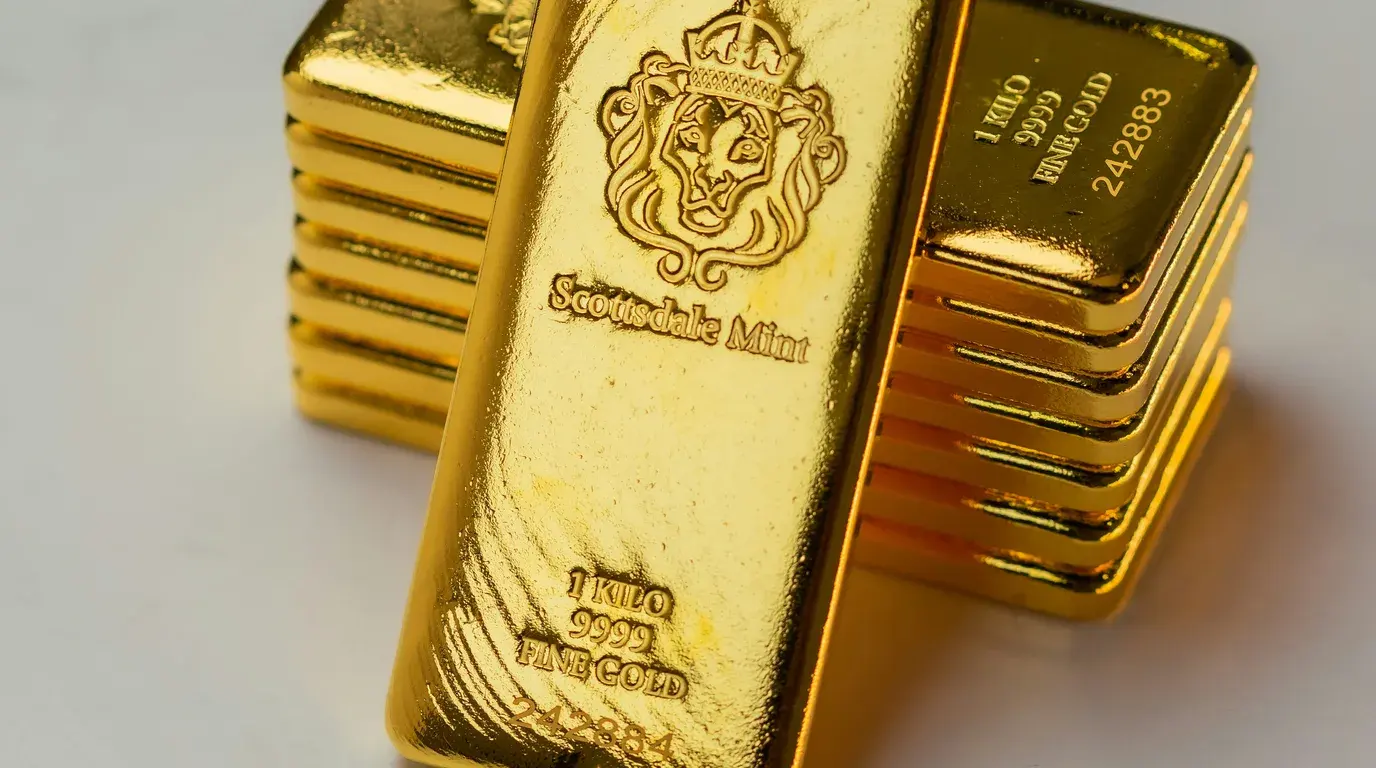
- Named products from named refiners. "One ounce of 999.9 gold" is not a product. A specific coin from a specific mint, or a bar from a named refiner with an assay card, is.
- Insured, tracked delivery, with the terms stated. Who bears the risk in transit, and up to what value? What is the procedure if a parcel arrives damaged or short? Get it in writing before the first order.
The red flags, ranked by how much they cost people
- Pressure and urgency. "This price is only available today." Bullion is a commodity traded continuously worldwide. There is no scarcity of the offer, only of your time to think.
- A price meaningfully below the market. Nobody sells gold below its cost. A price that looks too good is either not gold, not going to arrive, or not the product described.
- A pivot from bullion to "rare" or "collectible" coins. This is the most expensive pattern in the retail market. The buyer arrives wanting metal, is told that numismatic coins offer better upside, and pays a very large premium for a scarcity claim that only the seller is asserting. If you came for metal, buy metal.
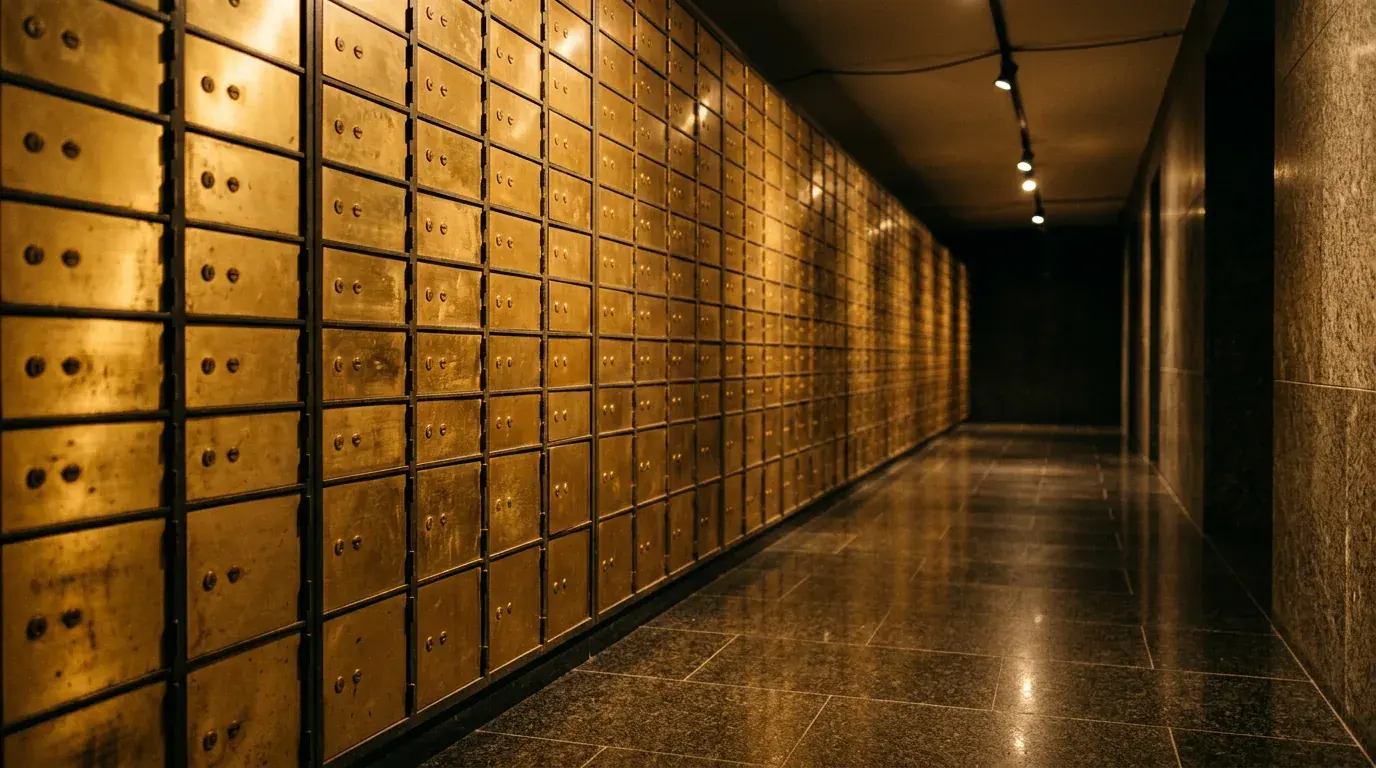
- Storage that is described but not documented. If a dealer offers to store your purchase, you need the storage contract, the vault operator's name, and — decisively — whether the holding is allocated to you specifically or pooled. Ask for the answer in writing. See our vault storage guide for what the terms mean.
- No buy-back at all. A dealer unwilling to bid for what they sell is telling you what they think the resale market for it is.
- Payment by irreversible methods only. Wire and bank transfer are normal in bullion because card fees are large relative to margins. Requests for cryptocurrency, gift cards or third-party intermediaries are not.
- Unsolicited contact. Almost no legitimate bullion relationship begins with a cold call about a retirement account.
The test order
For any dealer you have not used before, and for any order large enough to matter, place a small first order. It costs the premium on one small item and it tests the entire chain: does the price hold, does the confirmation match the order, does the parcel arrive in the stated window, is the packaging sealed, does the serial number on the assay card match the bar, and is the buy-back quote on that item what the website said it would be.
That last step is the one people skip. Ask for a buy-back quote on the item you just received, on the same day. You are not going to sell it — you are finding out whether the published spread is the real spread. A dealer whose bid is materially worse than advertised has answered a question that no review site could.
Verifying what arrived
When the parcel comes, do it properly and once.
- Open it on camera, unedited, before breaking any seal.
- Check the assay card serial against the bar. A mismatch is a stop.
- Weigh it. A precise scale is inexpensive and settles most concerns immediately, because a fake that matches both weight and dimensions is genuinely difficult to make.
- Keep the packaging intact. Original sealed packaging is part of the resale value, and breaking it to admire the metal is a costly ten seconds.
- File the invoice with the photographs. Documentation is what lets a future buyer skip an assay, as our guide to spotting fake gold explains in more detail.
What to ask before the first order
- What is your registered company name and number, and where is that registered?
- What is your premium on this specific product against live spot right now?
- What are you bidding for the same product right now?
- Does the buy-back price depend on the packaging being unopened?
- Who insures the shipment, to what value, and what is the claims process?
- If you store metal for clients: which vault operator, and is the holding allocated and segregated?
- What identity documents will you need from me, and at what order size?
That last question is worth asking early rather than being surprised by. Bullion dealers operate under anti-money-laundering obligations and will ask for identification at thresholds set by their regulator, not by them — our explanation of why a dealer asks for your passport covers what is normal and what is not.
The counter-argument
A reasonable objection to all of this: it is a great deal of process for buying a commodity, and the overwhelming majority of established dealers are entirely legitimate. That is true. Most buyers who do none of these checks will be perfectly fine.
The reason to do them anyway is that the distribution of outcomes is skewed. The cost of the checks is an hour, once, and it is paid whether or not anything is wrong. The cost of skipping them is occasionally the entire position, and it falls hardest on first-time buyers making their largest single purchase into a market they have not learned to read yet. An hour against that asymmetry is not caution, it is arithmetic.
Once a dealer has passed, the checks become routine and fast. Our beginner's guide to buying gold covers the purchase itself, and premiums over spot covers how to judge whether the price you are quoted is fair. When the time comes to sell, where to sell gold for the best spread covers the buy-back side of the same relationship.
FAQ
Are online dealers riskier than a local shop? Not inherently. A local shop lets you inspect before paying; an established online dealer usually offers better pricing and a published buy-back. The checks are the same either way.
Is a low price always a warning sign? A modestly better price is competition. A price below what the metal itself costs is not a price, it is a lure.
Should I use a dealer's storage programme? Only with the contract in front of you and the words allocated and segregated in it. Convenience is not a reason to become an unsecured creditor.
What if I have already bought from a dealer I now have doubts about? Request a buy-back quote and, separately, get an independent verification of the item. Both are cheaper than uncertainty.
Precious-metals prices are volatile and capital is at risk. Nothing here is financial advice. See our disclosure for affiliate relationships.
Thomas Lovas Lokoy is the founder of NorwegianSpark SA, the Norwegian company (org. 834 984 172) that runs Aureum & Co. He oversees the business. Articles are researched and drafted with AI assistance; Thomas is responsible for what goes live. Corrections: thomaslien@norwegianspark.com.

Continue in this collection

Editorial Selection
More in Alternative Asset Managers
Unpaid editorial listings · star ratings are our own view
Blackstone
United States · Est. 1985
One of the largest alternative asset managers in the world, with semi-liquid vehicles (BREIT, BXPE) open to individual investors. Semi-liquid does not mean liquid — redemptions are capped and can be gated.
Minimums, fees and assets under management vary by mandate and change over time. We publish no figure for this firm because we hold none we can source and date — confirm terms with the provider directly.
KKR
United States · Est. 1976
Pioneer of the leveraged buyout, now a diversified alternative asset manager with growing individual investor access.
Minimums, fees and assets under management vary by mandate and change over time. We publish no figure for this firm because we hold none we can source and date — confirm terms with the provider directly.
Partners Group
Switzerland · Est. 1996
Swiss-listed alternatives firm offering direct private markets investing with a focus on value creation.
Minimums, fees and assets under management vary by mandate and change over time. We publish no figure for this firm because we hold none we can source and date — confirm terms with the provider directly.