Some links in this article may be affiliate links. See our disclosure for details.
How to Sell Inherited Gold in Norway: 2026 Guide
By NorwegianSpark Editorial | Last updated: May 10, 2026
Why inherited gold is worth more than you think
Most inherited gold sits in a drawer for years before anyone checks its actual value. With gold trading near historic highs in 2026, even a single 18-karat chain can be worth several thousand kroner. This guide walks through how to value, certify, and sell it without getting underpaid.
Step 1 — Check the karat stamps
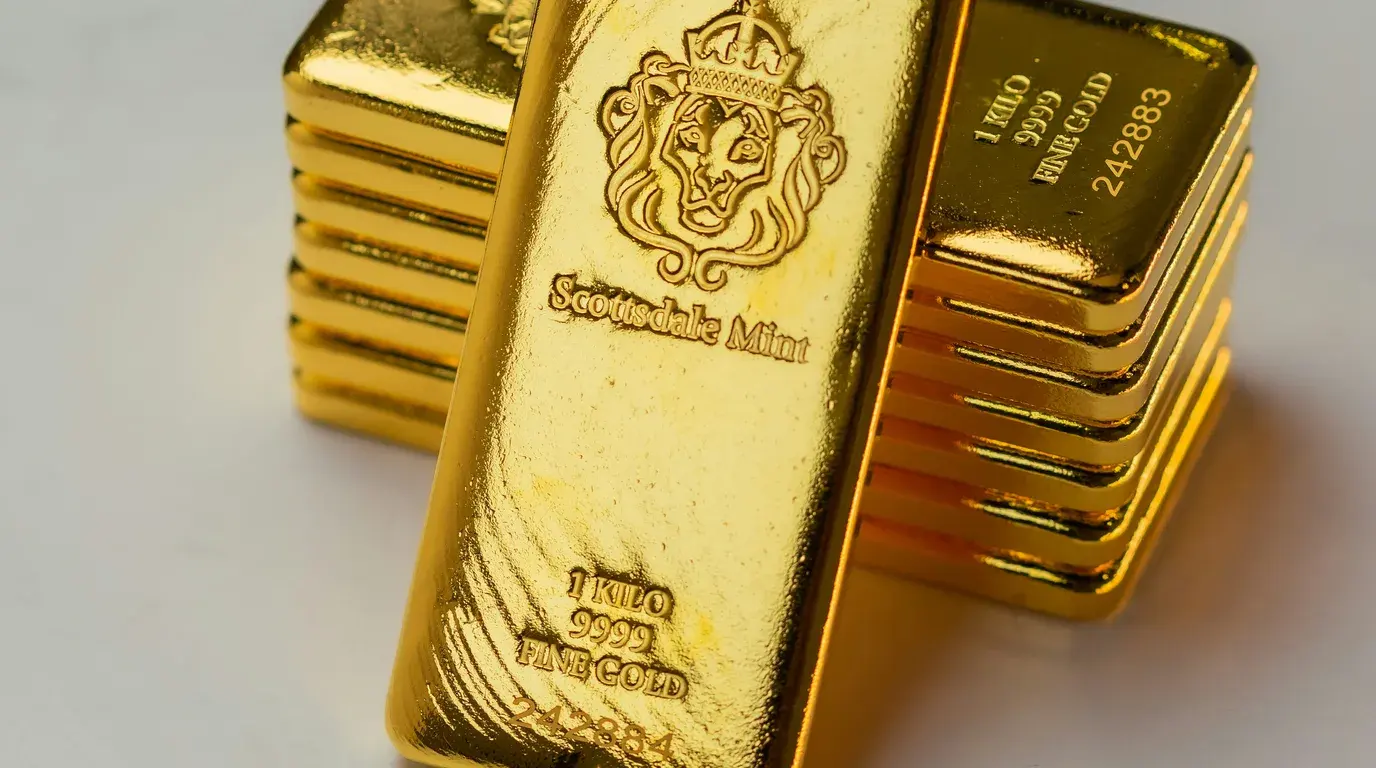
Look on the inside of rings, clasps, or pendant backs for stamps reading 333, 585, 750, or 999. These indicate karat purity: 8k, 14k, 18k, and 24k respectively. No stamp does not mean no gold — testing kits or a jeweller can confirm.
Step 2 — Weigh accurately
Use a digital scale accurate to 0.1 grams. Separate gold by karat — never mix purities, since payout is calculated per gram per karat. A kitchen scale will do for ballpark figures, but jewellers use calibrated scales.
Step 3 — Get multiple quotes
Always compare at least three buyers. Online services like Gullbrev pay competitive market rates and ship insured packaging. Local jewellers sometimes pay more for designer pieces with provenance.
What to watch out for
Avoid any buyer who refuses to test gold in front of you, refuses to disclose the per-gram rate, or pressures you to sell immediately. Reputable buyers offer free no-obligation quotes.
Selling safely and getting a fair price
Always compare at least three live quotes before you commit. Gullbrev buys jewellery, coins and bars across Norway at the daily spot price with insured shipping, and if you would rather reinvest the proceeds into new investment-grade bullion, a certified dealer such as Silver Gold Bull publishes transparent per-gram rates. Gold prices move daily and every buyer applies a margin, so any quote is an indication rather than a guaranteed payout. Capital is at risk whenever you hold or trade precious metals, and nothing here is financial advice.
Scrap value and collector value are two different prices
Every piece of inherited gold has at least two prices, and they are arrived at by completely different methods. Scrap value is arithmetic: weight, multiplied by purity, multiplied by the day's spot price, minus the buyer's margin. Any competent buyer will reach roughly the same number, which is why scrap quotes cluster.
Collector value is a judgement. It depends on the maker, the period, the condition, whether the original box and papers survived, and whether there is current demand for that specific thing. It has no formula, quotes for it vary enormously, and it can be several multiples of scrap — or identical to it, if nothing about the piece is distinctive.
The mistake that costs the most money is selling a collectable piece to a scrap buyer, because a scrap buyer is not paid to notice. Melting is irreversible. Before anything goes into a melt lot, photograph it, look for a maker's mark alongside the purity stamp, and search that mark before you accept a quote. If a name comes back with an auction record, you are in a different market and should be talking to a different buyer.
What a buyer's margin is actually made of
The gap between spot and the price you are offered is not pure profit, and understanding what sits inside it makes it much easier to tell a fair quote from a poor one. It covers refining cost, since scrap has to be assayed and melted before it re-enters the market. It covers price risk, because the buyer is exposed to gold moving between purchase and resale. It covers handling, insurance and testing. And whatever is left is margin.
Two practical consequences follow. First, margins are usually wider on small, mixed, low-karat lots than on large single-purity ones, because the fixed costs are the same either way. Second, a quote that refuses to separate the per-gram rate from the deductions is not a quote you can compare against anything. Ask for the rate and the deductions separately, in writing.
Hallmarks are not the same thing as karat stamps
A purity stamp — 333, 585, 750, 999 — tells you the gold content. A hallmark is a wider set of marks that can include a maker's mark, an assay office mark and sometimes a date letter, and it is the part that carries provenance. Norwegian, British, French and Swiss conventions all differ, and an unfamiliar mark is not evidence of a fake.
If a mark is worn, do not clean it. Polishing removes the surface that carries the mark and can reduce a piece's value on top of destroying the evidence.
Documentation for an inherited piece
Inherited gold raises a question that bought gold does not: who is entitled to sell it. Most reputable buyers will ask, and being ready shortens everything.
| What to have ready | Why the buyer or the estate wants it |
|---|---|
| Proof of identity | Anti-money-laundering checks apply to precious-metals dealers in most jurisdictions |
| Evidence you may sell | A probate or estate document, or written agreement from the other heirs |
| An itemised list with photographs | Protects you if a lot is disputed, lost in transit or split between heirs |
| Any original receipts, boxes or certificates | Moves a piece from the scrap market to the collector market |
| A record of the quotes you received | Makes the sale price defensible later, to heirs or to a tax authority |
Dividing a sale between heirs
Where several people inherit one collection, agree the method before the valuation rather than after, because a valuation changes what people want. The three workable methods are: sell everything and divide the cash, which is simplest and usually the least contested; divide the items by agreed value, which preserves pieces people care about but requires an agreed valuation basis; or have one heir buy out the others at an independent valuation.
Whichever is chosen, use one valuer for the whole collection. Mixing valuations from different sources produces numbers that are not comparable and arguments that are not resolvable.
Shipping, insurance and the point of no return
If you post gold to a buyer, three things matter more than the headline rate. Whether the shipment is insured for the full declared value rather than a standard parcel limit. Whether the buyer's terms let you reject their final offer and have the goods returned at their cost, or only at yours. And whether melting happens before or after you accept — because once a piece is melted there is nothing to return, and any dispute becomes a dispute about a number rather than about an object.
Read the returns clause before you post, not after the quote arrives. It is the single clause that decides how much leverage you keep.
Frequently Asked Questions
How much is 18-karat gold worth per gram in 2026?
Spot rates fluctuate daily. As of mid-2026, 18-karat (750) gold trades roughly at 75% of the spot 24k price, minus the buyer's margin. Always check current rates before selling.
Do I need to declare gold sales to Skatteetaten?
Personal jewellery sales are generally not taxable in Norway if you're selling at or below the original purchase value. Inheritance sales may require documentation — consult a tax adviser for amounts over NOK 100,000.
What if my gold isn't stamped?
Unmarked gold can still be valued via acid testing or X-ray fluorescence (XRF). Most professional buyers offer free testing as part of their quote.
Related reading: Gold Price in Norway: A Decade in Review
Continue in this collection
Editorial Selection
More in Alternative Asset Managers
Unpaid editorial listings · star ratings are our own view
Blackstone
United States · Est. 1985
One of the largest alternative asset managers in the world, with semi-liquid vehicles (BREIT, BXPE) open to individual investors. Semi-liquid does not mean liquid — redemptions are capped and can be gated.
Minimums, fees and assets under management vary by mandate and change over time. We publish no figure for this firm because we hold none we can source and date — confirm terms with the provider directly.
KKR
United States · Est. 1976
Pioneer of the leveraged buyout, now a diversified alternative asset manager with growing individual investor access.
Minimums, fees and assets under management vary by mandate and change over time. We publish no figure for this firm because we hold none we can source and date — confirm terms with the provider directly.
Partners Group
Switzerland · Est. 1996
Swiss-listed alternatives firm offering direct private markets investing with a focus on value creation.
Minimums, fees and assets under management vary by mandate and change over time. We publish no figure for this firm because we hold none we can source and date — confirm terms with the provider directly.