Some links in this article may be affiliate links. See our disclosure for details.
Safest Way to Store Physical Gold: Home vs. Professional Vault (2026 Tutorial)
By NorwegianSpark Editorial | Last updated: September 6, 2026
The decision this tutorial actually solves
Most gold storage advice answers the wrong question. It tells you which safe to buy before you have decided what you are protecting the metal from, and the answer changes completely depending on that. A holding you might need to liquidate inside a week has different requirements from one intended to sit untouched for a decade. A holding you want insured has different requirements again, because the insurer, not you, will set the specification.
This is a sequence, not a shopping list. Work through it in order and the safe, the location and the paperwork fall out of the decisions rather than being guessed at. Nothing here is financial advice, and apart from one published tariff used as a dated worked example, no figure below is quoted as a price, because storage pricing is negotiated per client and moves with the metal's value.
Step 1 — Name the threat you are actually defending against
There are four, and they call for different answers.
- Opportunistic burglary. Someone in your house for twenty minutes who takes what is visible and portable. Defeated by concealment and by anything that cannot be carried out.
- Targeted burglary. Someone who knows you hold metal, has time, and brought tools. Defeated only by rated resistance plus a monitored alarm — concealment alone fails here.
- Fire and water. Indifferent to your security. Gold itself survives most domestic fires, but paperwork, certificates and coin capsules do not, and a slabbed coin's grading label is part of its value.
- Counterparty and jurisdiction risk. The reason some holders use a vault outside their home country at all. A home safe does nothing about it; a third-party vault trades it for a different exposure, namely the vault operator.
Write down which of the four you care about most. That single answer decides Step 2.
Step 2 — Choose the storage venue before the hardware
| Home safe | Bank safe deposit box | Third-party bullion vault | |
|---|---|---|---|
| Access speed | Immediate | Branch hours, subject to the bank being open | By instruction; delivery or collection is arranged, not instant |
| Typically insured by default | No — bullion is usually excluded or capped under a standard household policy | Often not; banks commonly disclaim contents cover | Yes, as part of the storage contract — read what the cover actually names |
| Privacy | Highest | Bank knows a box exists, not what is in it | Operator holds a full inventory tied to your identity |
| Practical size limit | Whatever you can anchor and conceal | Box dimensions | Effectively none |
| Sale friction | You must find a buyer and ship the metal | Same, plus a branch visit | Lowest — metal already sits in a form and location dealers accept |
| Main failure mode | You become the security | Bank closure, access restriction, no contents cover | Operator insolvency, and whether your metal is legally yours or theirs |
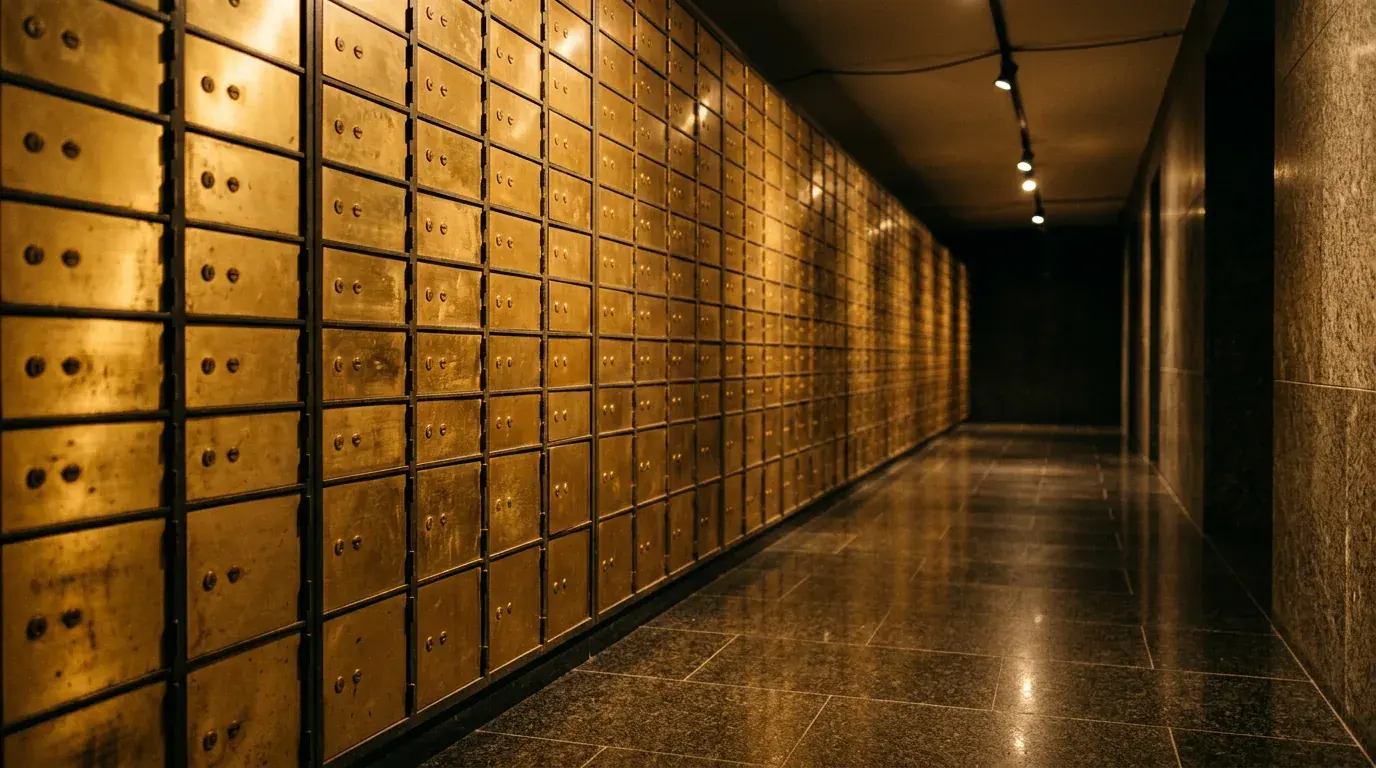
That last row is the one people skip. In a third-party vault the decisive question is not the fee, it is whether the arrangement is allocated — specific, serial-numbered bars recorded as your property — or unallocated, which is a claim on the operator's pool and ranks you as a creditor if they fail. Ask for that in writing before anything else. Dealers who offer storage alongside the metal make this easier to compare in one place — Silver Gold Bull's storage programme states allocated and segregated terms up front, which is the answer you are looking for either way. Our vault storage guide sets out the contract types in full, and the Swiss storage guide covers what changes when the vault sits in another jurisdiction.
Step 3 — If you chose home, specify the safe by its mark, not its marketing
Retail safe listings are written by retailers. The only part that carries an external standard behind it is the certification mark. UL's standard for burglary-resistant safes is UL 687, and the classes it defines are named in UL's own standards catalogue as Tool-Resistant Safe — Class TL-15 and Class TL-30 (verified at standardscatalog.ul.com, 6 September 2026). The number in the class relates to a rated resistance time against a defined tool set under test conditions.
The full attack-time definition sits behind UL's paywall, so do not accept a retailer's paraphrase of what TL-15 means. Look the specific model up on the certifier's own product listing and confirm the mark is issued for that model, in that configuration. A safe described as "TL-15 style" or "bank-grade" carries no certification at all — those phrases exist precisely because the mark does not.
Fire resistance is a separate rating from burglary resistance and a safe can carry one without the other. If your certificates, assay cards and purchase invoices live in the safe alongside the metal, you need both.
Step 4 — Anchor it, and place it badly on purpose
An unanchored safe is a lockable suitcase. The correct fixing depends entirely on what it stands on: a concrete slab takes masonry anchors through the base holes; a timber floor over joists is a structural question and should be treated as one, because a heavy safe bolted to a board that can be levered up has achieved nothing.
Placement is a trade-off nobody enjoys. The most convenient locations — main bedroom, entrance hall, home office — are the first places anyone searches, and the most secure locations are the ones you will resent visiting. Choose somewhere that requires passing through at least one other room, is not visible from a window, and is not the room a delivery driver or a tradesperson has ever stood in.
Step 5 — Insure it before you fill it, not after
This is the step that most often gets done backwards, and it is expensive to reverse. Household contents policies commonly exclude bullion outright or cap it at a level that makes the cover irrelevant, and specialist insurers write to a specification: a stated safe class, a stated alarm grade, sometimes a stated postcode. Buying the safe first and then discovering the insurer wanted a higher class means buying twice.
Ask the insurer three questions in writing before you commit to hardware.
- What safe classification and what alarm specification do you require at this declared value?
- Is the policy written on an agreed-value basis or a market-value basis, and is there an average clause?
- What documentation do you require at claim, and would you accept it today?
The second question is not academic. Our guide to agreed value and the average clause explains how a policy that looks adequate can pay out proportionally less than you expect after a partial loss simply because the declared sum was low.
Step 6 — Build the record that makes a claim survivable
Photograph every item individually, including the assay card and the serial number where the bar carries one. Record description, fineness, weight, purchase date, dealer, invoice number and the serial. Keep one copy outside the house — a claim record that burns with the collection is not a record.
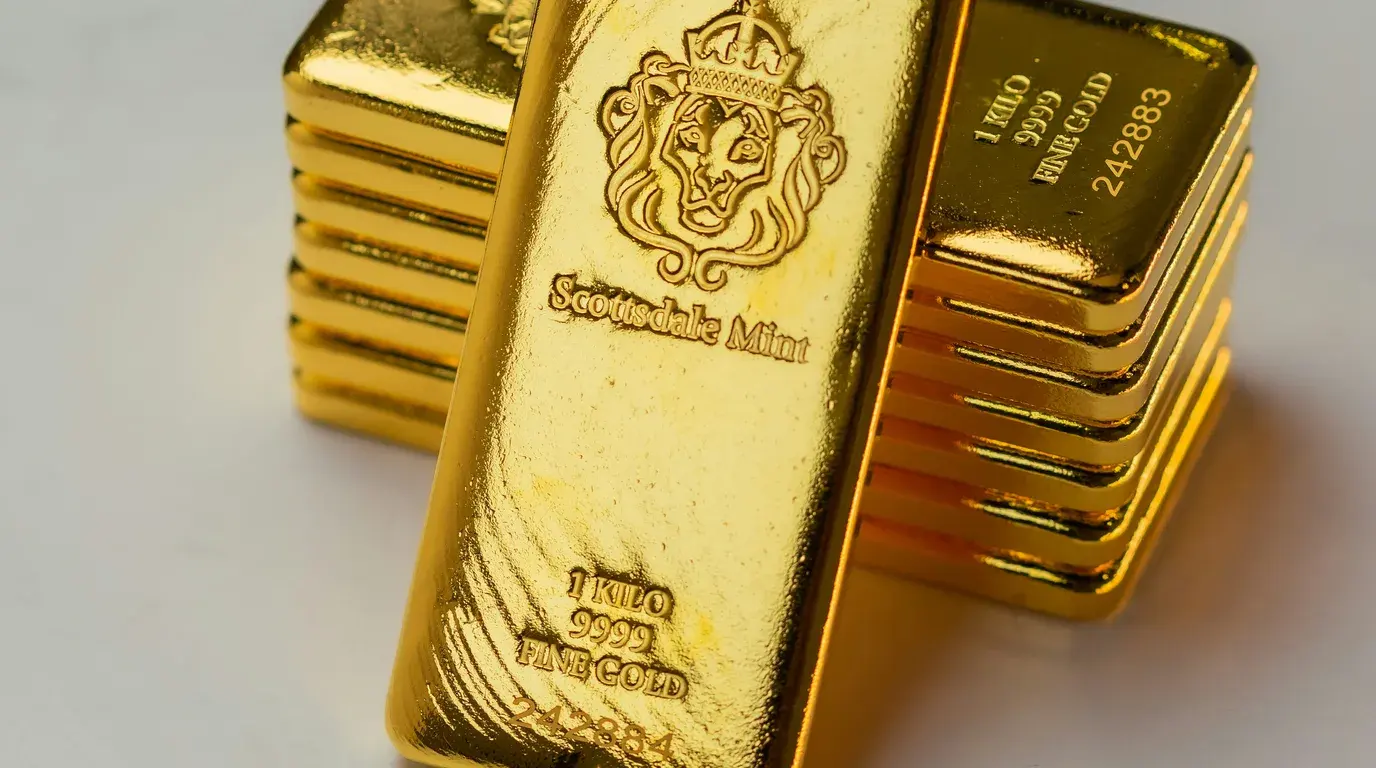
Serial numbers matter more than most owners realise. A recognised refiner's bar with an intact assay card and a matching serial is resaleable without re-testing. The same metal, unpackaged and unrecorded, invites an assay before anyone will quote on it. The chain of documentation is a large part of what you are storing.
Step 7 — Review annually, and actually test it
Once a year: re-photograph, update the declared value to reflect the current market rather than what you paid, replace desiccant, and physically try to shift the safe. If it moves, the installation failed and you have been carrying a risk you thought you had closed.
Worked example: costing both venues for one holding
This tutorial quotes no storage prices of its own, but you can cost the vault side of Step 2 from any published tariff. BullionVault's (read 16 October 2026) charges 0.12% a year with a $4 monthly minimum. For a $40,000 holding the percentage and the minimum meet: $48 a year, or $240 over five years at an unchanged price. For $10,000 the minimum still applies, so the same $48 is an effective 0.48% a year; for $100,000 it is $120 a year.
The home side needs three written quotes: the safe at the class your insurer names, the anchoring work, and five years of premiums at your declared value. Put both totals side by side over the same five years, then add the cost you identified in the last question below — what each venue would cost you in time and re-assay if you had to sell within a fortnight. If you are in Europe, the safe class your insurer names will usually be an EN 1143-1 grade rather than a UL class; our home storage guide sets out the two systems side by side.
What to ask before you pay anything
- Which of the four threats in Step 1 is this arrangement actually defeating?
- Is the certification mark issued for this exact model, verifiable on the certifier's site?
- If a vault: allocated or unallocated, and segregated or pooled? In writing.
- What does the insurer require, and is my current arrangement already compliant?
- If I needed to sell in a fortnight, what would this arrangement cost me in time and re-assay?
The honest limits, and the counter-argument
The strongest argument against home storage is not burglary — it is that home storage optimises for a scenario most holders will never face while imposing a cost they face every day. You take on the security role permanently, your insurance is more expensive and more conditional, and when you eventually sell, undocumented metal from a private residence is exactly the profile a dealer discounts.
The strongest argument against vault storage is equally real: you have swapped a physical risk you control for a counterparty risk you do not, and the allocated-versus-unallocated distinction that protects you is a contractual term, not a physical fact. Both arguments are correct. The split most experienced holders arrive at — a modest, quickly accessible home holding plus the bulk in an allocated third-party vault — is not a compromise so much as an acknowledgement that the two risks are genuinely different and neither venue closes both.
For the home-specific detail, see how to store gold at home safely; for the broader venue comparison across metals, how to store gold and silver. If you are still deciding whether to hold physical metal at all, our gold versus real estate comparison covers the carrying-cost side of that question.
FAQ
Does a bank safe deposit box come with insurance? Frequently not. Banks commonly disclaim liability for contents. Ask for the contents position in writing and arrange separate cover if the answer is no.
Is gold damaged by humidity? Pure gold does not corrode, but packaging, certificates and grading labels degrade, and some alloyed coins can tone. Control humidity for the paperwork, not for the metal.
Should I tell my insurer exactly what I hold? Yes, if you want the claim paid. Underdeclaring is the fastest route to a reduced settlement.
Can I split a holding across venues? Yes, and it is common. Confirm each insurer knows about the other locations, because some policies price on total declared value regardless of where it sits.
Precious-metals prices are volatile and capital is at risk. Nothing here is financial advice. See our disclosure for affiliate relationships.
Continue in this collection

Editorial Selection
More in Alternative Asset Managers
Unpaid editorial listings · star ratings are our own view
Blackstone
United States · Est. 1985
One of the largest alternative asset managers in the world, with semi-liquid vehicles (BREIT, BXPE) open to individual investors. Semi-liquid does not mean liquid — redemptions are capped and can be gated.
Minimums, fees and assets under management vary by mandate and change over time. We publish no figure for this firm because we hold none we can source and date — confirm terms with the provider directly.
KKR
United States · Est. 1976
Pioneer of the leveraged buyout, now a diversified alternative asset manager with growing individual investor access.
Minimums, fees and assets under management vary by mandate and change over time. We publish no figure for this firm because we hold none we can source and date — confirm terms with the provider directly.
Partners Group
Switzerland · Est. 1996
Swiss-listed alternatives firm offering direct private markets investing with a focus on value creation.
Minimums, fees and assets under management vary by mandate and change over time. We publish no figure for this firm because we hold none we can source and date — confirm terms with the provider directly.