Some links in this article may be affiliate links. See our disclosure for details.
The Complete Gold IRA Guide: Tax-Advantaged Precious Metal Investing
By NorwegianSpark Editorial | Last updated: January 30, 2026
Why a Gold IRA Now
For US investors, the Gold IRA — technically a self-directed IRA (SDIRA) — provides the opportunity to hold physical gold (and other IRS-approved precious metals) within a tax-advantaged retirement account structure. The tax mechanics are identical to a traditional or Roth IRA:
Traditional Gold IRA: Contributions potentially deductible; withdrawals in retirement taxed as ordinary income. Roth Gold IRA: Contributions from post-tax dollars; qualified withdrawals in retirement entirely tax-free.
The strategic rationale in 2026: holding a physical asset with genuine inflation-hedging properties inside a structure that defers or eliminates capital gains taxation creates a compounding advantage over taxable physical gold ownership.
What You Can Hold
IRS regulations specify that a Gold IRA can hold:
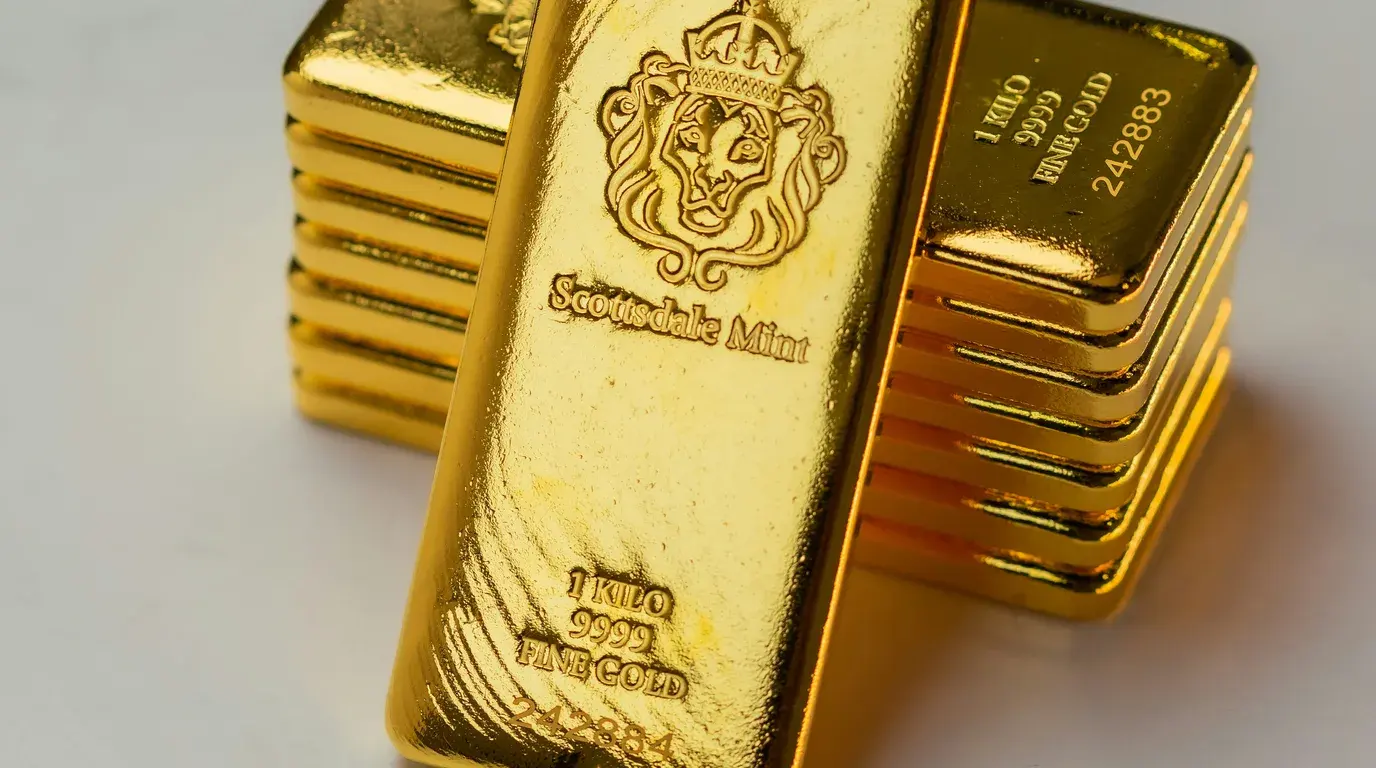
- Gold: 99.5%+ purity. Acceptable products: American Gold Eagle coins (exception — despite only 91.67% gold, explicitly IRS-approved), Canadian Maple Leaf, Australian Kangaroo/Nugget, American Buffalo, and LBMA-certified bars
- Silver: 99.9%+ purity. American Silver Eagle, Canadian Maple Leaf, bars
- Platinum: 99.95%+ purity
- Palladium: 99.95%+ purity
What you cannot hold: Collectible coins (South African Krugerrands, pre-1933 US coins, numismatic coins), jewellery, or home-stored metals (IRS rules require third-party IRS-approved storage).
Choosing a Gold IRA Provider: The Critical Decision
The provider is the part of a Gold IRA most likely to go wrong. Treat this as due diligence rather than shopping, and start with the one thing a firm cannot fake: what it is willing to publish.
Begin with the fee schedule on the public website. A provider that puts its full schedule in writing has made a commitment you can hold it to. A provider that will only discuss fees on a call has not.
Noble Gold Investments publishes a complete schedule. A gold and silver IRA has a $20,000 minimum and a $50 one-time set-up fee, then $125 a year in account maintenance and $160 a year in metals storage — $285 annually, flat, whatever the account is worth. It also publishes the charges most firms leave unsaid: $30 per wire, $75 for an in-kind distribution and $250 to close the account. Cash purchases outside an IRA start at $10,000. Storage is described only as a "Secure Texas Depository", and the custodian is not named on the public pages. Figures read from noblegoldinvestments.com in August 2026.
American Hartford Gold states no minimum, set-up, maintenance or storage figure on its Gold IRA page, and names neither its custodian nor its depository there. That is not an accusation — it is the sector norm — but it does mean any fee comparison has to wait until you are on the phone.
A flat fee is not automatically a cheap fee
Flat annual pricing gets marketed as the investor-friendly structure. It is, above a certain balance. Noble Gold's $285 is about 1.4% a year on a $20,000 account and about 0.29% on a $100,000 one. A competitor charging 0.5% of assets costs $100 on the smaller account and $500 on the larger. Which structure wins depends entirely on your balance, so run the arithmetic on your own number rather than on the marketing.
The case that should shape your checklist
Regal Assets solicited customers to move money out of tax-deferred retirement accounts and into precious metals bought through self-directed IRAs. On 25 October 2024 a federal court in the Central District of California entered default judgments against Regal Assets LLC, its owner and chief executive, and its former president, ordering payment of more than $49 million (CFTC press release 9001-24). The CFTC and the California Department of Financial Protection and Innovation had jointly alleged that customer funds handed over to buy metals were misappropriated. The National Futures Association was appointed monitor for restitution.
The lesson is procedural rather than historical. A polished website, heavy promotion and favourable placement in "best gold IRA" rankings told those customers nothing about whether the metal existed. The checklist below would have.
Verify before you transfer a single dollar
- Confirm the custodian is a separate, named entity rather than the dealer itself, and verify it independently.
- Confirm the depository by name, and confirm your holding is allocated and segregated rather than pooled.
- Get the complete fee schedule in writing before funding, wire, distribution and closure fees included.
- Search the firm's name against the CFTC, the SEC and your state securities regulator.
- After purchase, ask for written confirmation of the specific metals held, and check the depository's own reporting rather than relying on the dealer's statement.
The Rollover Mechanics
Direct rollover (preferred): Your existing IRA or 401(k) custodian transfers funds directly to the new SDIRA custodian. Zero tax or penalty implications.
60-day rollover: Funds distributed to you; you must redeposit within 60 days or face full taxation and 10% early withdrawal penalty. Avoid unless necessary.
Transfer limits: Roth IRA to Roth Gold IRA and traditional to traditional — unlimited rollovers. Annual contribution limit ($7,000 for 2026, $8,000 if 50+) applies to new contributions only, not rollovers.
Storage: The IRS Requirement
All Gold IRA metals must be stored at an IRS-approved third-party depository — you cannot take personal possession of IRA metals until distribution age (59½). The approved depositories:
- Delaware Depository (most common provider)
- Brink's Global Services (highest security tier)
- International Depository Services (IDS)
Storage fees: approximately $150-300 annually for allocated storage. Most reputable Gold IRA companies include the first year storage fee in their establishment package.
The Fee Reality
Gold IRA fees are higher than conventional IRA structures — this is the cost of the physical asset and specialised storage. A typical annual cost structure:
- IRA custodian fee: $50-100/year
- Storage fee: $150-250/year (usually flat, not AV-based)
- Transaction fees: $50-100 per metal purchase
Against a meaningful gold position ($50,000+), the total annual carrying cost of 0.5-0.7% is well below the long-run appreciation expectation.
Distribution and Liquidation
At 59½, you have two options:
- In-kind distribution: Metals physically delivered to you (triggers ordinary income tax at current FMV)
- Sell and take cash: Custodian liquidates at spot price, funds distributed (triggers ordinary income tax)
For Roth Gold IRA holders who have held for 5+ years: qualified distributions are entirely tax-free — the most tax-efficient structure for gold with long time horizons.
Required Minimum Distributions (RMDs): Traditional Gold IRAs are subject to RMDs beginning at age 73. Roth Gold IRAs have no RMD requirements during the original owner's lifetime — another advantage for multi-generational wealth strategies.
Continue in this collection


Editorial Selection
More in Alternative Asset Managers
Unpaid editorial listings · star ratings are our own view
Blackstone
United States · Est. 1985
One of the largest alternative asset managers in the world, with semi-liquid vehicles (BREIT, BXPE) open to individual investors. Semi-liquid does not mean liquid — redemptions are capped and can be gated.
Minimums, fees and assets under management vary by mandate and change over time. We publish no figure for this firm because we hold none we can source and date — confirm terms with the provider directly.
KKR
United States · Est. 1976
Pioneer of the leveraged buyout, now a diversified alternative asset manager with growing individual investor access.
Minimums, fees and assets under management vary by mandate and change over time. We publish no figure for this firm because we hold none we can source and date — confirm terms with the provider directly.
Partners Group
Switzerland · Est. 1996
Swiss-listed alternatives firm offering direct private markets investing with a focus on value creation.
Minimums, fees and assets under management vary by mandate and change over time. We publish no figure for this firm because we hold none we can source and date — confirm terms with the provider directly.